Should You Wear Glasses in Your Professional Headshot?
Should you wear glasses in your headshot? How to avoid glare, which frames photograph well, and how AI tools handle glasses.
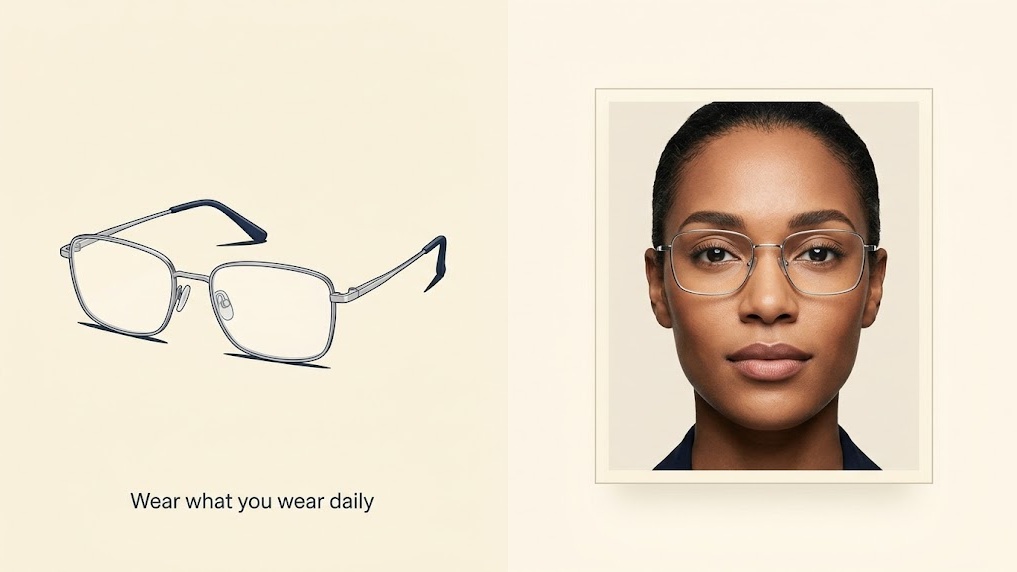
Table of Contents
If someone meets you in a meeting and you always wear glasses, a headshot without them creates a small but real disconnect.
That said, there are practical considerations. Glare, lens reflections, and frame style all affect how the photo turns out.
When to Keep Your Glasses On
Simple rule: if you wear them daily, they're part of how people see you.
Taking them off for a headshot and then wearing them at every meeting, call, and event creates a recognition gap. Your headshot is a promise. It should match how you actually show up.
Keep glasses on when:
- ✅ You wear them every single day
- ✅ They're part of your professional identity
- ✅ They're simple, clean frames
- ✅ Your lenses have anti-reflective coating
When to Consider Removing Them
There are situations where taking glasses off for a headshot makes sense.
🔴 Heavy glare. If your lenses are thick or reflective and create strong glare under studio lighting, removing them may produce a cleaner result.
🔴 Frames that obscure the eyes. Thick decorative frames or oversized glasses can reduce eye visibility. Eyes are the most important part of a headshot. Anything blocking them is a problem.
🔴 Lenses with strong tint. Blue-light glasses with a heavy tint can shift how your eyes read in the photo.
👉 Tip: Bring both options if possible. Shoot a set with and without glasses. See which version works better for your specific situation.
How to Avoid Glare
Glare is the main technical challenge. Here's how to minimize it:
Anti-reflective lens coating: The single most effective solution. AR coating eliminates most glare and is worth it if you're updating your prescription anyway.
Tilt the frames forward slightly: Angle the bottom of the frames away from your face. This deflects light coming from overhead or in front.
Adjust the lighting angle: Position lights off to the side and slightly above, not directly in front of your face.
Matte frames: More forgiving than glossy or metallic frames under direct light.
For home setups, how to take professional headshots at home covers lighting angles in detail.
Frames That Photograph Well
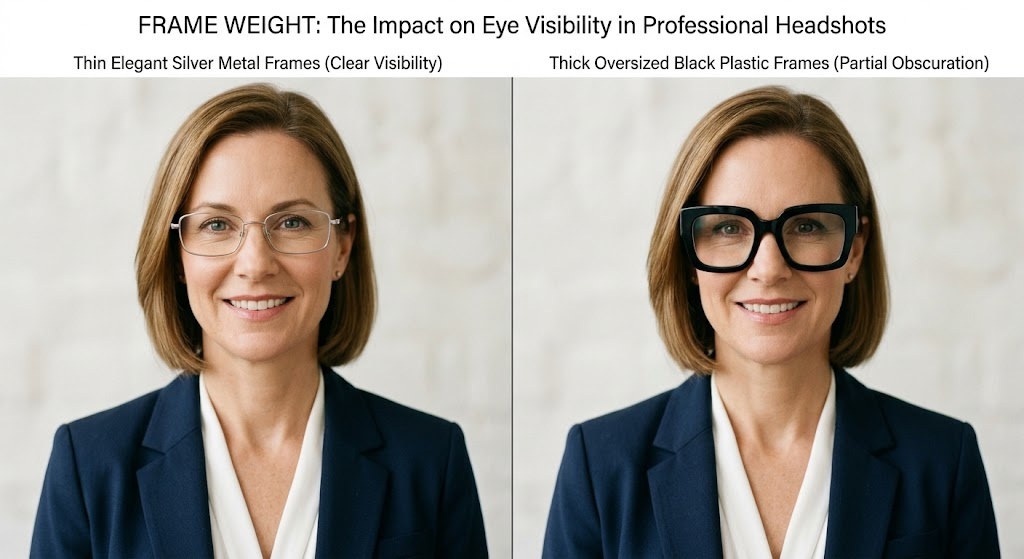
Not all frames behave the same under a camera lens.
✅ Work well:
- Thin metal frames
- Matte-finish plastic frames
- Simple rectangular or oval shapes
- Neutral colors (black, gray, brown, tortoiseshell)
❌ More challenging:
- Thick, heavily decorated frames
- Oversized frames that cover too much of the face
- Bright or bold colors that compete with your expression
- Reflective metallic or mirrored frames
How AI Headshot Tools Handle Glasses
Most AI tools preserve glasses well from your source photos.
The key is uploading clear source photos where your glasses aren't causing glare or heavy reflection. If your input photos have glare on the lenses, the output will too.
Tip: Upload a set of photos without glasses as a backup option. What kind of photos work best for AI headshots explains what source quality matters most.
How to tell if an AI headshot looks real covers how to spot when AI has rendered glasses awkwardly, which can happen when input quality is poor.
See LinkedIn headshots and corporate headshots for examples of how glasses appear across professional contexts.
Want to see how your headshot looks with and without glasses? Proshoot generates multiple variations from your source photos so you can compare both options before deciding.
Frequently Asked Questions

Fazil
Content Writer